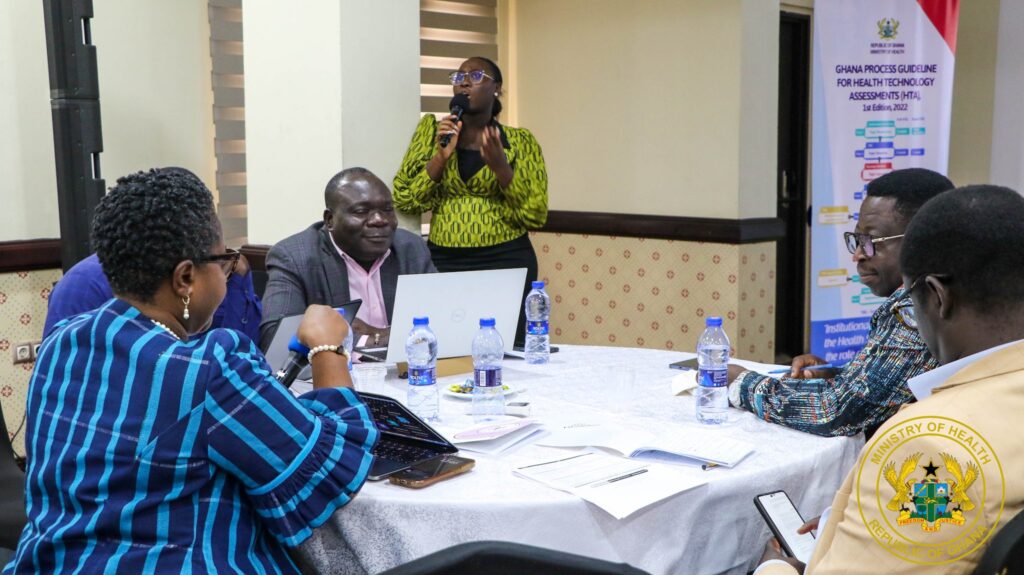

Accra, Ghana – November 12, 2025 – The Ministry of Health (MoH), through the SAVING (Sustainable Access and Delivery of New Vaccines in Ghana) Consortium, successfully convened a high-level dissemination meeting at the AH Hotel in Accra to share groundbreaking findings from its implementation research on integrating new health technologies into Ghana’s health system.
The event, organized under the MoH-led Work Package 3 of the EDCTP-funded SAVING project, brought together key stakeholders from government institutions, academia, regulatory agencies, and development partners to discuss evidence-based strategies for improving the uptake and delivery of new vaccines and health technologies.
Building Capacity for Sustainable Health Technology Adoption
The SAVING Consortium, comprising the University of Health and Allied Sciences (UHAS) as lead institution, the Ministry of Health (MOH), the Food and Drugs Authority (FDA), and the Swiss Tropical and Public Health Institute (SwissTPH), with technical support from WHO-TDR and PATH/Access and Delivery Partnership, has been at the forefront of strengthening Ghana’s capacity to assess, adopt, and deliver new medical interventions.
“The SAVING project demonstrates how partnerships between policy institutions, regulators, and academia can translate research into real-world policy decisions that strengthen national systems,” said Prof. Margaret Gyapong, Principal Investigator of the SAVING Consortium, in her opening remarks.
Key Research Findings Presented
The dissemination featured seven scientific presentations highlighting implementation research studies across critical areas:
- Health Technology Assessment (HTA) Enhancement: Research revealed barriers to applying HTA findings during Ghana’s COVID-19 vaccine rollout, leading to the development and testing of a Stakeholder Engagement Manual that has significantly improved evidence uptake in subsequent assessments, including the evaluation of artesunate-pyronaridine (AS-PY) for malaria treatment.
- Supply Chain Strengthening: Studies on supply chain readiness for new technologies resulted in practical manuals and enhanced capacity among procurement officers to ensure efficient vaccine delivery systems.
- Drug Information System Revitalization: Evidence-informed strategies were developed to improve dissemination mechanisms for new health technologies, ensuring healthcare professionals have access to reliable, timely medical information.
- Policy Integration: Implementation research approaches demonstrated how to streamline the Standard Treatment Guidelines review process and accelerate the inclusion of new health technologies.
Tangible Impact on Ghana’s Health System
The SAVING Consortium has achieved significant capacity-building milestones:
- Over 120 health professionals trained in implementation research methodologies
- Multiple personnel supported to pursue Master’s and PhD qualifications
- Establishment of functional HTA structures within the Ministry of Health
- Development of practical tools and manuals for stakeholder engagement, supply chain management, and drug information dissemination
Mr. Saviour Yevutsey, Director of Pharmacy at the Ministry of Health and Work Package 3 Lead, noted that “Implementation research allows us to move beyond discovery to actual delivery. It ensures that innovations are not only introduced but also integrated effectively into our health system.”
A Model for Evidence-Informed Policy Making
Ghana’s approach under the SAVING Consortium aligns with the Access and Delivery Partnership (ADP) value chain framework, which emphasizes six pillars for successful health technology implementation: efficient regulatory control, enabling policy environment, robust HTA systems, effective procurement and supply chain management, quality implementation research, and responsive pharmacovigilance.
The meeting concluded with renewed commitments to institutionalize HTA within Ghana’s health sector, strengthen cross-sectoral collaboration, and ensure that research evidence translates into practical benefits for all Ghanaians.
About the SAVING Consortium
The SAVING Consortium is funded by the European & Developing Countries Clinical Trials Partnership (EDCTP) and supported by the European Union. The consortium works to build sustainable systems for equitable access and delivery of new vaccines and health technologies in Ghana, serving as a model for other low- and middle-income countries.